

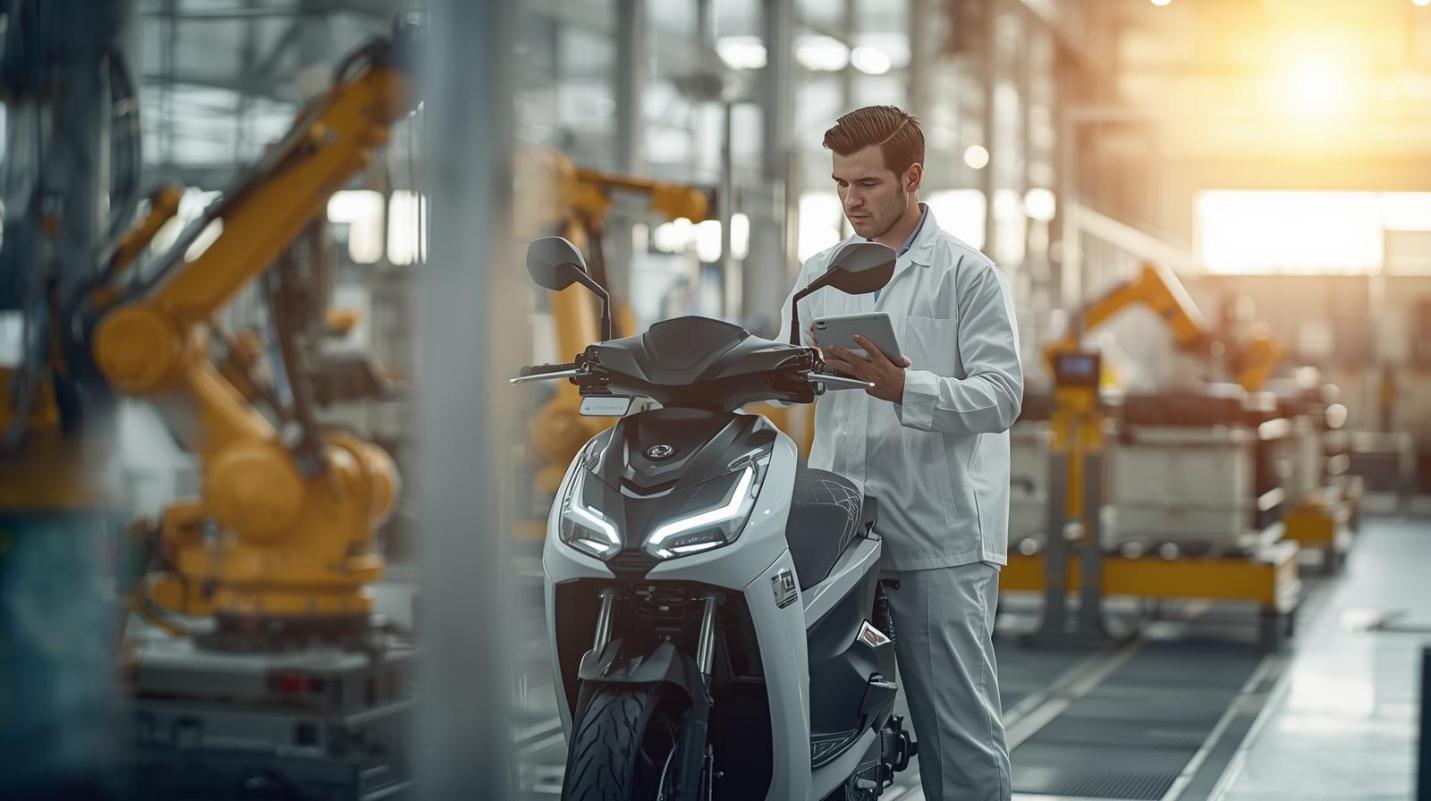
Producers of electric motorcycles are doing a lot more than just mechanical innovation. Digital innovations are just as important.
With more competitors and customers eager to buy, companies are turning to S4 consulting & implementation to optimize their enterprise systems and design a seamless operational backbone.
This investment transcends software upgrades. The investment is also about transforming the company into a smart, data-centric organization that is able to scale production, supply visibility, and overall market responsiveness.
The electric motorbike industry is an example of a high-growth and high-variability market. Components, the technological evolution of batteries, and regulations quickly change and become obsolete.
Older and legacy systems can’t handle the complexity and rapid change. Modern ERP systems help overcome these challenges.
With an updated ERP, companies can have real-time updated procurement, production, finance, and distribution data and help their decision makers have an integrated perspective of the business.
Simplifying Complicated Supply Networks
The electric motorbike industry relies heavily on complicated and diverse global supply chain systems, especially for batteries, semiconductors, and innovative lightweight materials.
Any delay in these systems can disrupt the entire production of the motorbike.
When implemented strategically, advanced ERP systems can help motorbike producers have predictive planning capability, automated procurement workflows, and supplier performance analytics.
Manufacturers develop the capacity to manage risks proactively rather than only responding to them.
More accurate, data-fueled inventory streamlining means fewer production halts due to having the right amount of inventory on hand.
The outcome is more streamlined processes and greater flexibility. Both attributes are important in a marketplace where competition is intensifying mobility services.
Innovation Cycle Acceleration
The product life span in the electric motorbike space is on the decline.
An expectation consumers have is longer battery life and smarter model iterations, including more advanced features, each with added connectivity and robust safety.
Digital systems of software operate together with engineering, production, and finance teams, enabling collaboration through a shared data environment.
Manufacturing plans and cost estimates integrate seamlessly with design updates.
This streamlining of processes, along with cuts in data fragmentation through limited manual reconciliation, results in a faster time to market for prototypes and complete production systems.
Companies are better positioned to control balance and maintain both innovation leadership and profitability.
ALSO READ: Electric Motorbike Brands Gain a Competitive Edge by Mastering Smart Email Capture
Enhancing Customer-Centric Operations
The growth in electric mobility is replicating consumers’ experiences. Customers have come to expect tracking of orders and delivery within a timeframe, as well as responsiveness to the service networks aligned with them.
The entire linkage with the service of sales, including the center of service, along with the partner of logistics and the core of ERP, are tied together for seamlessly spanning the entire chain, providing complete visibility.
Feedback from service-connected data from motorbikes can be integrated into the planning of future maintenance and the development of products and services.
Accrual for warranty services can be managed more precisely, and the distribution of spare parts can be optimized.
These services can improve the development of brand loyalty and the potential for recurring service revenue, which is an increasingly substantial revenue stream.
Driving Sustainable and Scalable Expansion
Operational sustainability is also important in addition to sustaining value in the electric motorbikes. The latest ERP systems can track and measure energy, materials, and greenhouse gas emissions to increase operational efficiency.
Senior management is now able to connect the environmental aspect to the financial side of the equation, which justifies and supports the growth of responsible strategies.
As companies grow geographically, the ability to replicate a set of digitally standardized processes is quicker and less risky.
Within a defined set of parameters, we perform financial consolidation, compliance reporting, and tax management seamlessly.
This focus on operational processes frees leadership to prioritize geographically strategic development.
The electric motorbike companies that are investing in building comprehensive digital systems are the companies that will be able to grow strongly, innovate rapidly, and compete confidently in the fast-evolving world of mobility.