
 Electric motorbikes are changing how people travel, especially in busy cities where fuel costs, traffic, and environmental concerns influence daily transportation choices. These vehicles offer a practical alternative to traditional petrol-powered motorcycles. They are generally quieter, require less routine maintenance, and produce no exhaust emissions while riding. However, the benefits of electric motorbikes go beyond their electric motors and rechargeable batteries. Smartphones are becoming an important part of the riding experience.
Modern electric motorbikes increasingly use digital technology to improve convenience, navigation, security, and vehicle monitoring. Many models support mobile applications that allow riders to check battery levels, review travel information, and access connected features. As these capabilities develop, understanding phone specifications becomes more important for riders who want to make the most of their electric vehicles.
Choosing a smartphone for an electric motorbike is not simply about purchasing the newest or most expensive device. Riders should consider battery life, screen visibility, GPS accuracy, connectivity, and compatibility with their motorcycle’s digital system. The right combination can make everyday journeys easier, safer, and more efficient.
How Smartphones Are Changing Electric Motorbike Technology
Electric motorbikes have developed from simple battery-powered vehicles into transportation options with increasingly advanced digital features. Manufacturers are introducing mobile applications that connect smartphones to motorcycles through Bluetooth, cellular networks, or other supported communication systems. These connections can provide useful information without requiring riders to interact directly with the vehicle’s dashboard.
One of the most practical features is battery monitoring. Some electric motorbike applications display the remaining battery percentage, estimated riding range, and charging status. Riders can review this information before leaving home or during a planned stop. This helps them decide whether their motorcycle has enough power to complete a journey or whether they should find a charging location.
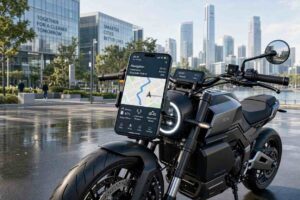
Navigation is another area where smartphones provide significant value. Riders can use mapping applications to identify suitable routes, estimate travel times, and avoid heavy traffic. Certain connected motorcycle systems also support navigation information through their dashboards. This allows riders to follow directions without constantly checking their phones.
Security features are becoming more common in connected electric motorbikes. Depending on the model, mobile applications may provide vehicle location tracking, movement alerts, or remote locking controls. These functions can help owners monitor their motorcycles when parked. However, their availability depends on the manufacturer’s technology and the motorcycle’s installed hardware.
Smartphones can also support maintenance planning. Some connected systems display vehicle diagnostics, service reminders, or notifications about potential technical issues. This information helps riders recognize when their motorcycle may require professional attention. Although electric motorbikes typically have fewer moving engine components than petrol motorcycles, regular maintenance remains necessary for brakes, tyres, batteries, and electrical systems.
These developments show how smartphones are becoming useful companions for electric motorbike owners. Instead of serving only as communication devices, they can provide a convenient connection between riders and their vehicles.
Important Phone Specifications for Electric Motorbike Riders
Not every smartphone delivers the same experience when used alongside an electric motorbike. Different phone specifications affect navigation, application performance, connectivity, and reliability. Understanding these features can help riders choose devices that meet their transportation needs.
Battery capacity is one of the most important considerations. Navigation applications, mobile data, and continuous GPS use can consume considerable power. A smartphone with a battery capacity of around 5,000 mAh may be suitable for many riders, although actual battery life depends on screen brightness, network conditions, and application usage. Fast charging can also be helpful for people who frequently travel throughout the day.
Screen quality matters because riders often use their smartphones outdoors. A display with strong brightness and good visibility under sunlight makes maps and travel information easier to read when safely stopped. OLED and high-quality LCD screens can both work well, depending on their brightness and anti-reflective properties. A screen measuring approximately 6 to 6.7 inches offers a practical balance between readability and portability for many users.
GPS performance is equally important. Smartphones with reliable satellite positioning can provide more accurate navigation, particularly in unfamiliar areas. Support for multiple satellite systems, such as GPS, Galileo, GLONASS, and BeiDou, may improve positioning under suitable conditions. However, tall buildings, tunnels, and poor signal environments can still affect accuracy.
Connectivity should also be considered. Bluetooth allows compatible smartphones to communicate with certain electric motorbikes, while 4G and 5G networks support online maps, traffic updates, and cloud-based services. Riders should confirm that their chosen smartphone supports the specific connection requirements of their motorcycle’s application.
Processing power and memory influence how smoothly applications operate. A modern mid-range processor and approximately 6 GB to 8 GB of RAM should provide sufficient performance for most navigation and motorcycle management applications. Riders who frequently switch between mapping, communication, and vehicle monitoring tools may benefit from additional memory.
Durability is another valuable feature. Smartphones used around motorcycles may encounter rain, dust, vibration, and changing temperatures. A device with an IP67 or IP68 water-resistance rating offers some protection against water and dust under specified test conditions. However, these ratings do not guarantee protection from every riding environment. Strong vibration from handlebar mounts can also damage some smartphone camera stabilization systems, making suitable vibration-dampening mounts worth considering.
Phone specifications should ultimately match how riders intend to use their devices. A commuter may prioritize battery life and navigation, while someone taking longer journeys may place greater importance on connectivity, durability, and charging options.
Choosing the Right Smartphone for a Connected Riding Experience
Selecting a smartphone for an electric motorbike requires more than comparing technical specifications. Compatibility with the motorcycle’s digital features should be the starting point. Riders should check whether the manufacturer’s application supports Android, iOS, or both operating systems. They should also review minimum software requirements and confirm which features are available for their particular motorcycle model.
Practical usability matters just as much as performance. A smartphone with excellent specifications may still be inconvenient if its screen is difficult to read outdoors or its battery drains quickly during navigation. Riders should consider their typical journey length, charging opportunities, and the applications they use most frequently.
For daily commuting, a dependable mid-range smartphone can often provide everything necessary. Reliable GPS, a bright display, sufficient battery capacity, and stable Bluetooth connectivity may be more useful than advanced gaming performance or premium camera features. This makes it possible to find a suitable device without spending unnecessarily.
Long-distance riders may have different priorities. Extended navigation sessions require dependable power management, while unfamiliar routes make accurate positioning particularly valuable. Offline maps can provide additional convenience in areas with limited mobile coverage. A suitable phone mount and a compatible charging solution can also improve the overall experience.
Safety should remain a priority when combining smartphones with electric motorbikes. Riders should configure navigation before starting their journeys and avoid handling their phones while moving. Voice guidance and supported dashboard displays can reduce the need to look away from the road. Any smartphone interaction that requires attention should be completed after stopping safely.
As electric motorbike technology continues to develop, smartphone integration may become an increasingly familiar part of everyday transportation. Better mobile applications, improved vehicle connectivity, and more accessible charging information could make electric riding more convenient for a wider range of users.
The most suitable smartphone is not necessarily the one with the highest specifications. It is the device that works reliably with the rider’s motorcycle and supports their everyday needs. By considering battery performance, GPS, connectivity, screen quality, and durability, electric motorbike owners can make informed decisions that improve their connected riding experience.